It’s 11:55 p.m. Your phone screen is the only light in the room. Your thumb is hovering. Not because of insomnia. Because a drop goes live in five minutes and you’ve been waiting three months for this exact moment.
If you’re a sneakerhead, you already know this feeling. If you’re not, you might be wondering: why do people care this much about shoes?
The answer isn’t simple – and that’s the point. Why sneakerheads collect shoes is one of those questions with ten legitimate answers, all of them true at the same time. It’s about memory and identity. It’s about belonging and status. It’s about the hunt, the hype, and yes, sometimes the money. The global sneaker market topped $91 billion in 20241, and a significant part of that is driven by collectors who treat shoes the way others treat art.
Here’s what’s really going on.
It Starts With a Feeling: Nostalgia and Emotional Connection
Nobody wakes up one day and decides to become a sneakerhead. It usually starts with a feeling.
For most collectors, there’s a shoe that started it. Maybe it was a pair your older sibling wore. Maybe it was what Michael Jordan had on when he hit the shot. Maybe you saw them in a music video and something clicked. The point is, a specific shoe connected to a specific memory, and that connection never fully faded.
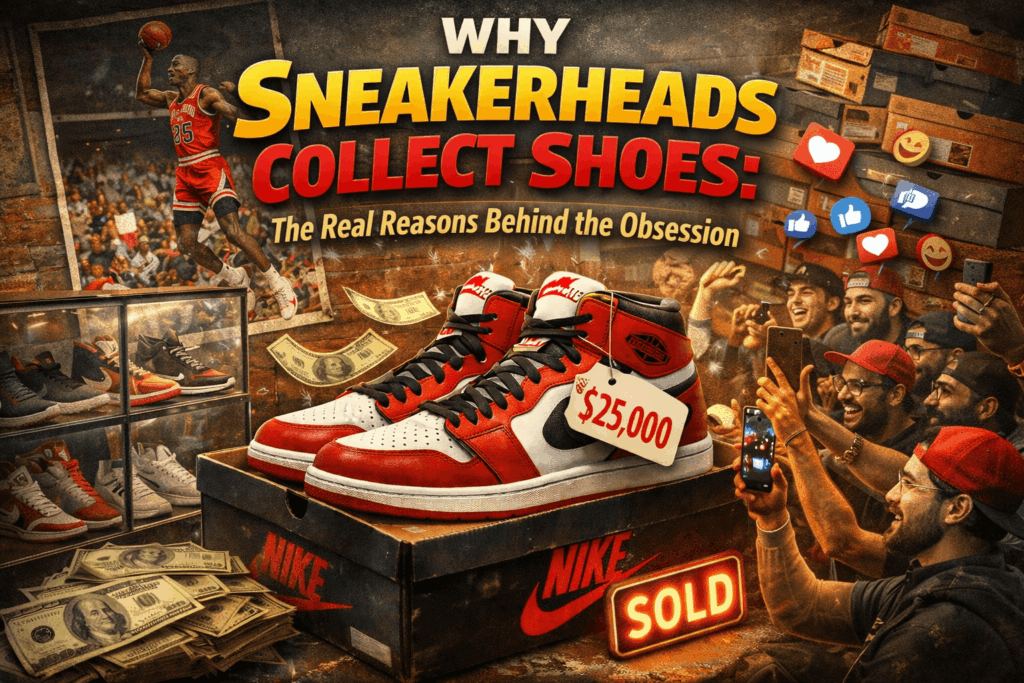
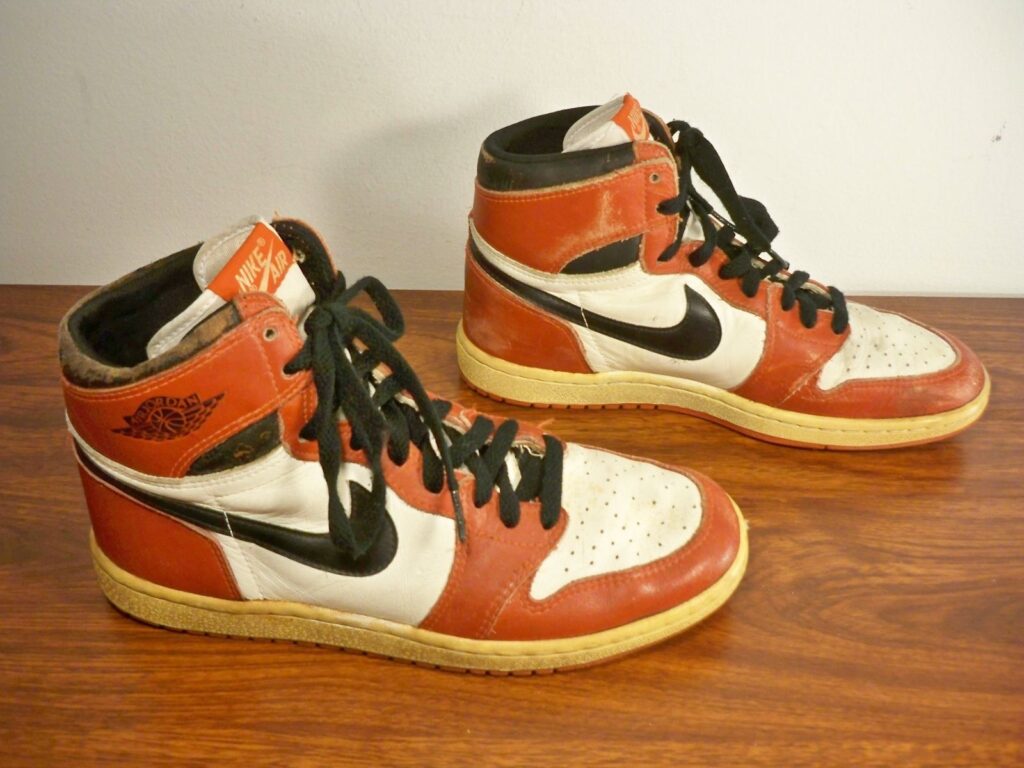
Sneakers can hold nostalgia the way a song can – almost magnetically. The history of Air Jordan sneakers tracks this perfectly: each model was tied to a cultural moment, a team, a season, a championship. When you buy a pair of Bred 1s or Chicago 1s today, you’re not just buying foam and leather – you’re reaching back toward something that mattered to you.
This is why retros sell so well. Brands understood early that reissuing a classic wasn’t just nostalgia marketing – it was letting people buy a piece of a memory. Collectors understand this intuitively, even when they can’t fully articulate it.
Kicks as Identity: Self-Expression and Status
Walk into any room with a pair of Travis Scott Reversal 1s on your feet and you won’t need to introduce yourself to other sneakerheads. They already know you did your homework.
Sneakers function as a wearable biography. What you collect – and what you wear – communicates who you are before you open your mouth. It signals taste, cultural literacy, and sometimes wealth. But more than the money, it’s the knowledge behind the choice that matters. Knowing the colorway name, the release year, the collab context, the resell history – that’s a kind of cultural fluency that earns real respect2.
This is also why customization exists at the edges of the culture. Some enthusiasts go beyond collecting off-the-shelf releases to commission custom painted, embroidered, or reconstructed shoes – turning a pair into something entirely their own3. Whether you rock what Nike dropped or commission something no one else has, the message is the same: these are mine, and they say something about me.
The Thrill of the Hunt
There’s a reason sneakerheads talk about “copping” a pair rather than “buying” it.
Acquiring a limited sneaker is a process with its own emotional arc. The research phase: learning the release details, picking the right size, figuring out which retailers to use. The drop itself: refreshing SNKRS, entering multiple raffles, staying up past midnight. And when you get them, the rush isn’t just about the shoes – it’s about winning a competition most people didn’t even know they were in.
Understanding what makes a sneaker a grail is core to understanding the thrill: grails are the rarest, most coveted pairs – the ones that separate serious collectors from casual buyers. Chasing a grail can take years. That pursuit is part of the point.
Even failure deepens the obsession. Losing a raffle doesn’t discourage most sneakerheads – it sharpens the desire. And when you finally do cop that pair? You have a story. One you’ll tell other sneakerheads, who will immediately get it.
Sneaker Culture Is a Community Sport
That story is exactly the point – because sneaker culture isn’t a solo hobby.
Sneakerheads connect at events like Sneaker Con, at local meetups, in Discord servers and Reddit threads, through Instagram posts of full fits. The shared language creates immediate bonds between strangers. You meet someone wearing a pair of Off-White Dunks and you already have ten minutes of conversation before you’ve said a word4.
This sense of belonging is one of the most underrated drivers of collecting. The community creates what researchers describe as a “tribe” – a group where shared passion forms real social bonds. For a lot of younger collectors especially, that belonging matters as much as the shoes themselves.
The hunt is personal. The culture is communal. Both matter.
The Scarcity Game: Why Limited Means Everything
Here’s something brands don’t usually advertise: scarcity is almost always engineered.
When Nike releases 10,000 pairs of a colorway worldwide – for a market of millions of potential buyers – the sellout within seconds isn’t an accident. It’s a strategy. The fewer the pairs, the more each pair means. There’s a behavioral logic at work here – and brands know it5.
Limited releases trigger FOMO at a near-physiological level. Social proof – seeing everyone scrambling for the same pair – amplifies the signal. By the time a drop happens, the desire has been building for weeks through teasers, leaks, and hype cycles. The product barely needs to sell itself.
For collectors, understanding this game is part of the culture. The sharpest ones track release calendars, study brand history, and decide deliberately which limited drops are actually worth chasing.
Sneakers as Smart Money: The Investment Angle
Not every sneakerhead is in it for the money. But smart collectors know their hobby can pay off.
Take the Jordan 1 Off-White “Chicago” – bought at retail for around $190 in 2017, it was trading above $4,000 on secondary markets within months. That’s one example among hundreds. The sneaker resale market is projected to reach $51.2 billion by 2032, growing at a compound annual rate of 16.4%6. Platforms like StockX, GOAT, and Grailed have professionalized the process, giving collectors transparent pricing data and global buyers.
The most expensive Jordans ever sold have crossed into multi-million dollar territory at auction, turning what once seemed extreme into a verifiable investment thesis7.
The typical play is more grounded: buy two pairs of a limited release at retail – one to wear, one to store. Research which collabs historically hold value. Know when to sell and when to hold.
At the higher end, some pairs sit in temperature-controlled storage, never worn, waiting for the right moment to sell. That’s not a metaphor – it’s literally how the most serious collectors operate.
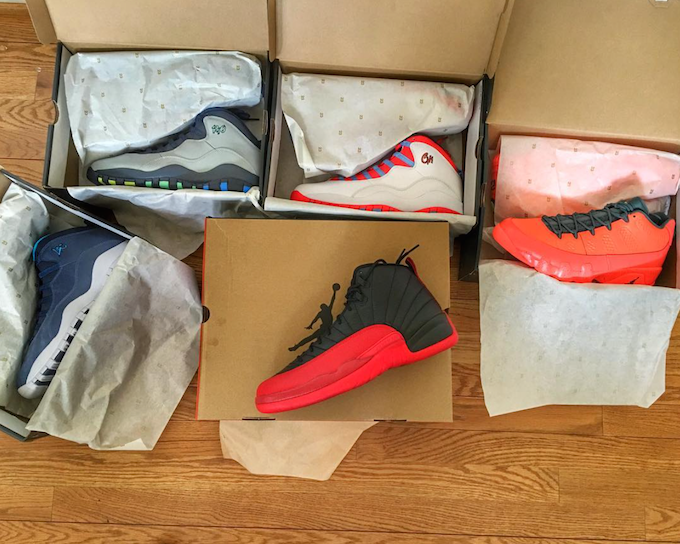
Who Are Sneakerheads in 2024?
Sneaker culture has changed. Significantly.
It’s no longer a culture that belongs to any one group. The stereotype of sneakerheads – young, male, urban – hasn’t matched reality for years. Women’s share of the sneaker resale market jumped from just 1.6% in 2014 to 42.7% in 20228. Gen Z and Millennials are the most active buyers, but dedicated collectors exist across every age group and income level.
Geographically, North America remains the largest market (the U.S. accounts for roughly 42% of global sneaker consumption), but Asia-Pacific is growing fast. The culture has spread far beyond its New York and Los Angeles origins.
The common thread isn’t age or gender or zip code. It’s the shared obsession with the kicks. That part hasn’t changed9.
FAQ: The Basics, Answered
What is a sneakerhead?
A sneakerhead is someone who collects, trades, or is deeply passionate about sneakers – particularly rare, limited-edition, or culturally significant pairs. The term carries no judgment: some sneakerheads own five pairs, others own five hundred.
Are sneakers a good investment?
Some are. Limited-edition drops from brands like Jordan Brand and Nike have historically held or grown in value on the secondary market. It’s not guaranteed, but for collectors who do their research, it can be a real financial strategy – not just a hobby.
What brands do sneakerheads collect most?
Nike and Jordan Brand lead. Adidas – especially retro models like the Samba and older Yeezys – stays relevant. New Balance has seen a serious Gen Z resurgence. Supreme and Off-White collaborations remain among the most coveted in the resale market.
How many pairs does the average sneakerhead own?
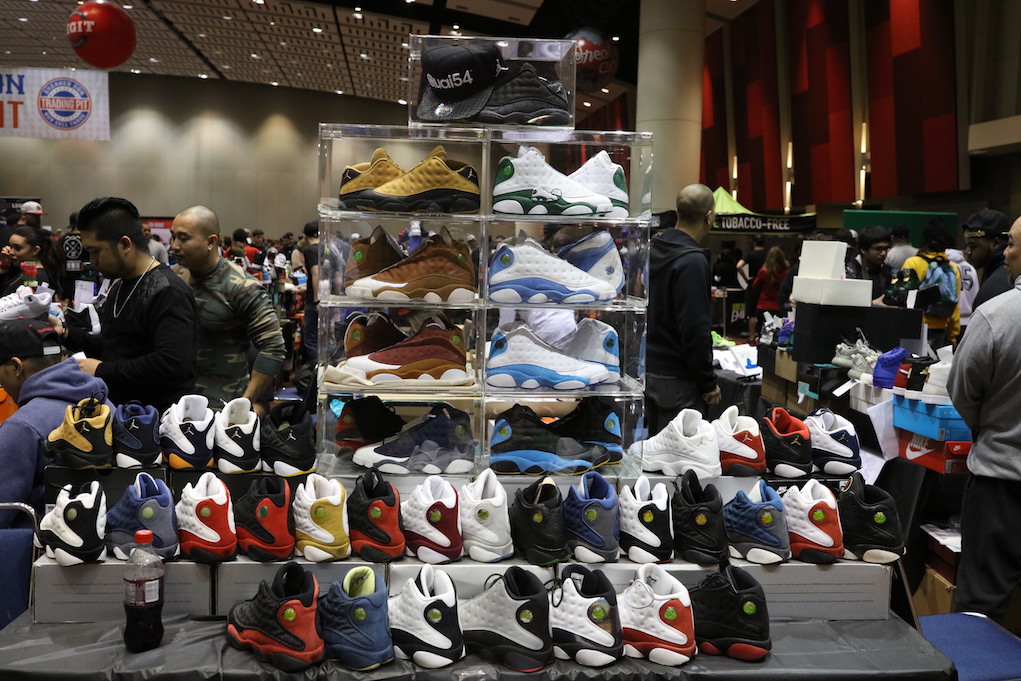
It ranges dramatically. Casual collectors might have 10-20 pairs. Serious ones can have hundreds, with dedicated display rooms or custom shelving to show them off.
The Obsession Makes Perfect Sense
Once you understand the layers, the midnight drops and the serious money spent don’t seem irrational at all.
Sneakerheads collect because shoes carry memory. Because a perfect pair says something about who you are. Because the hunt is genuinely exciting. Because the community is real and welcoming. Because the economics can actually work in your favor.
At its core, the passion is something you feel long before you can explain it – and that first feeling is what makes it last.
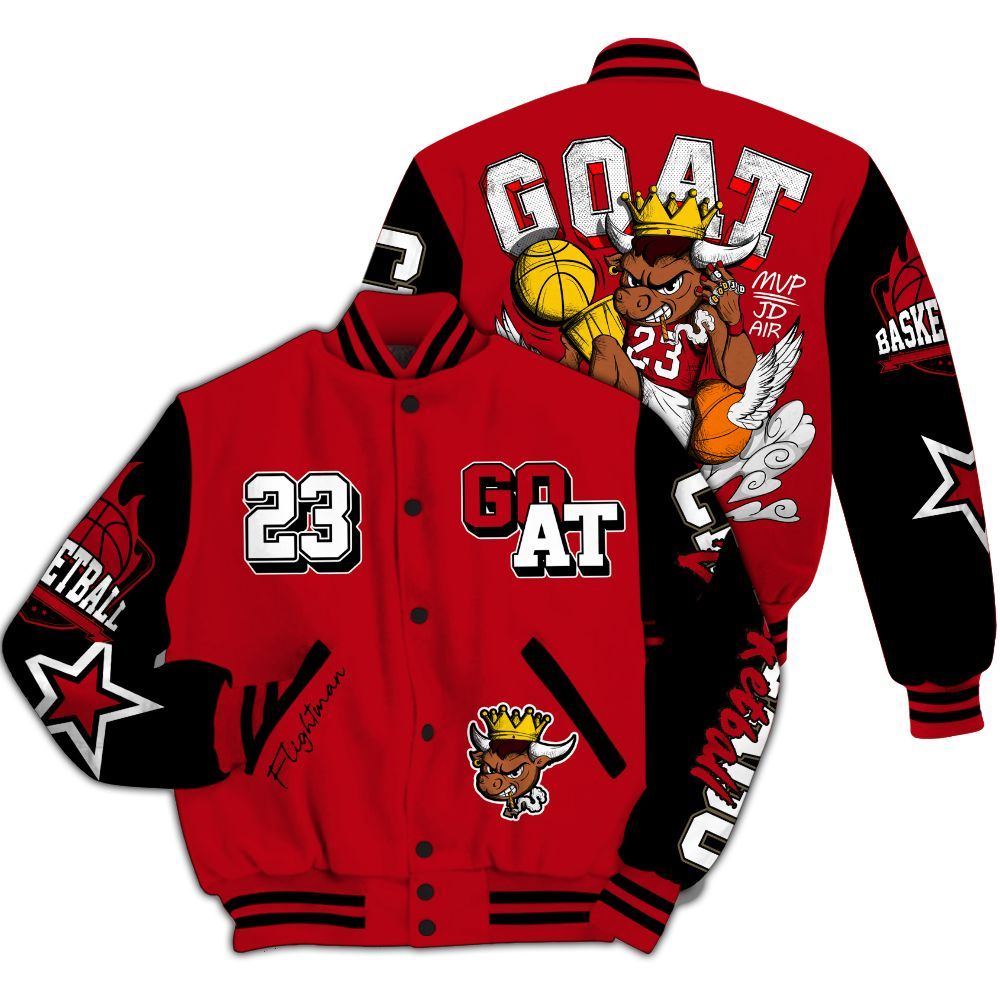
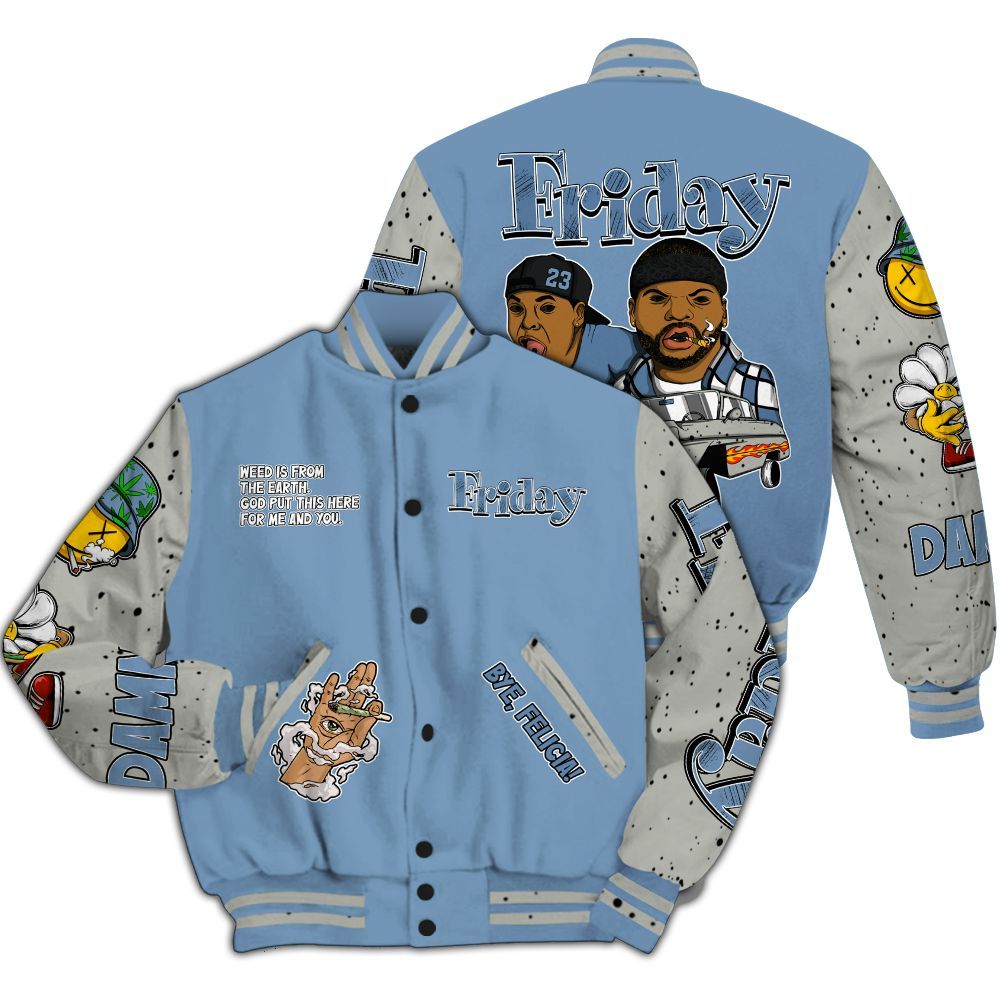
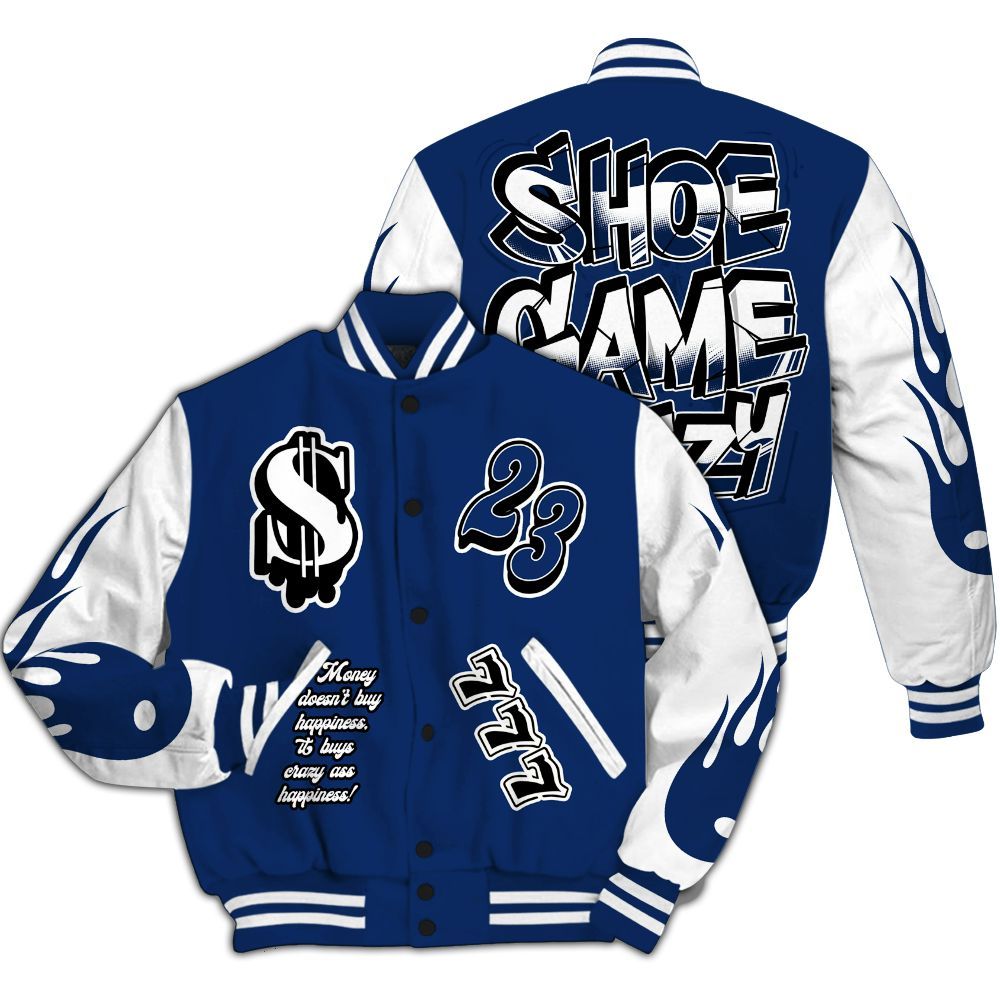
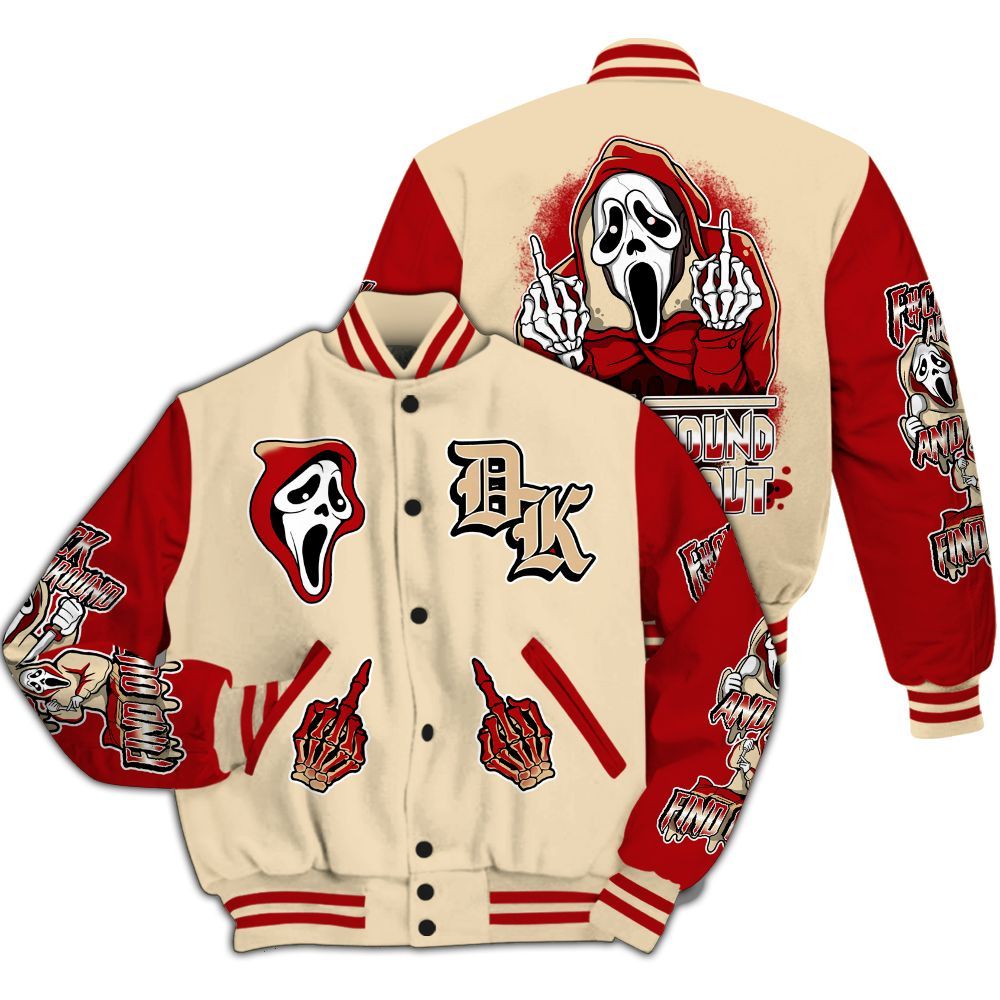
At Dunkare, we understand the obsession doesn’t stop at the shoes. The outfit around the kicks matters just as much – matching the energy, the color story, the culture. Because when you’re rocking a pair worth talking about, everything you wear should be saying the same thing.
- IMARC Group – Global Sneaker Market Report 2024, imarcgroup.com
- pressbooks.pub – Cultural significance of sneakers study
- Wikipedia – Sneaker Collecting, wikipedia.org
- Sneakers4Good – The Community Behind Sneaker Collecting, sneakers4good.com
- EBSCO academic database – Consumer behavior in limited-edition sneaker markets
- RunRepeat – Sneaker Resale Market Statistics, runrepeat.com
- EconMarketResearch – Sneakers Collectibles Market Report 2026, econmarketresearch.com
- BestColorfulSocks Sneaker Resale Market Report, bestcolorfulsocks.com
- Simon-Kucher Consumer Sneaker Survey 2024, simon-kucher.com